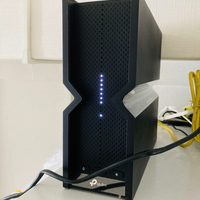
I recently switched my home internet in Tokyo from SoftBank’s 10G fiber to NTT Docomo’s 10G service. After seeing multiple users complain about the instability of Docomo’s rented gateway WiFi, I decided to take matters into my own hands and buy a proper 10G WiFi 7 router: the TP-Link BE550 Pro.
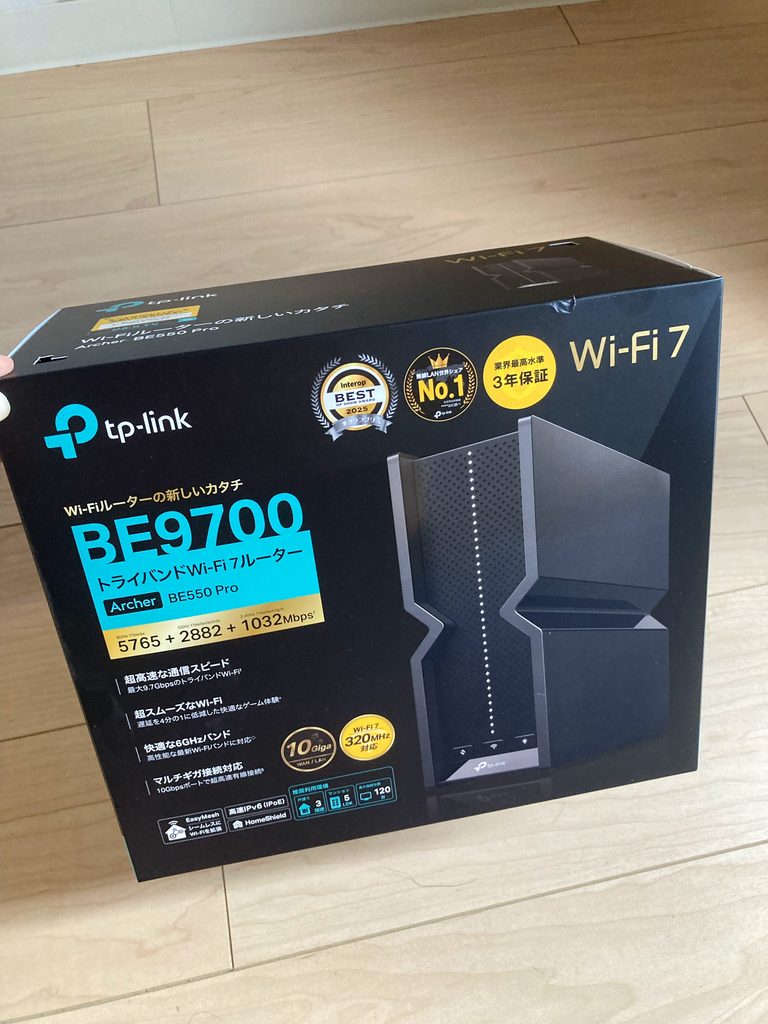
At the time of purchase, this model was the cheapest 10G 6GHz WiFi 7 router available on the Japanese market. Thanks to the weak Yen and recent price adjustments across consumer electronics, I picked it up for 26,000 JPY (around $175 USD).
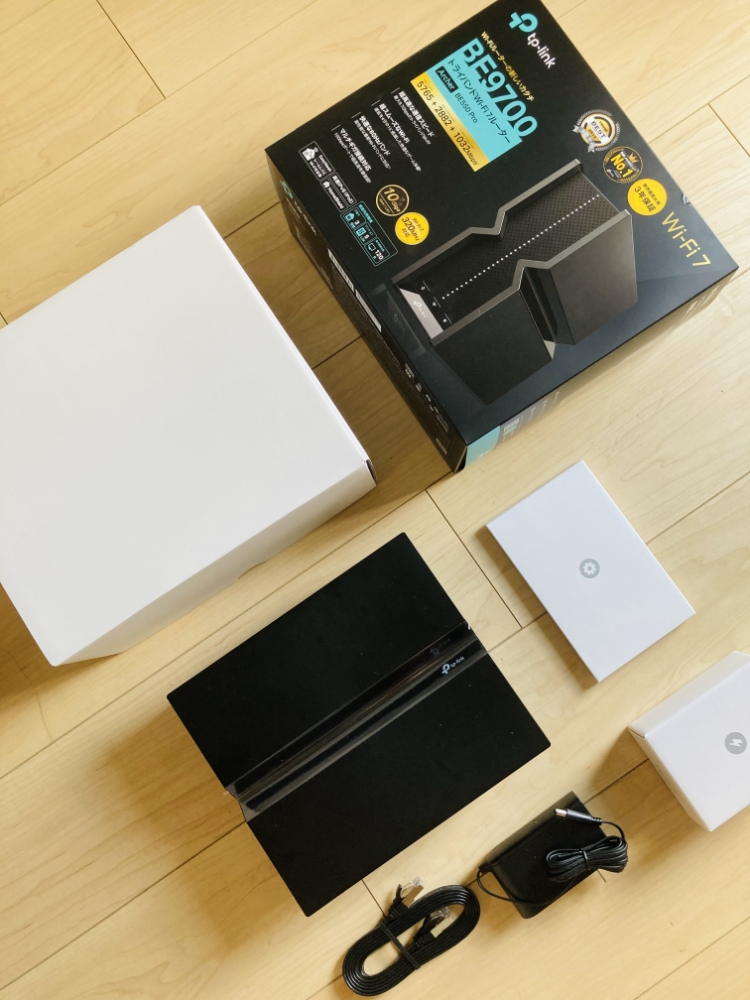
Here is my honest, unfiltered review after putting it through its paces.
Unboxing & Design
The packaging is minimalist. Aside from the main unit and manual, you only get a wide-voltage power adapter and a 1.5-meter shielded Cat6A Ethernet cable.
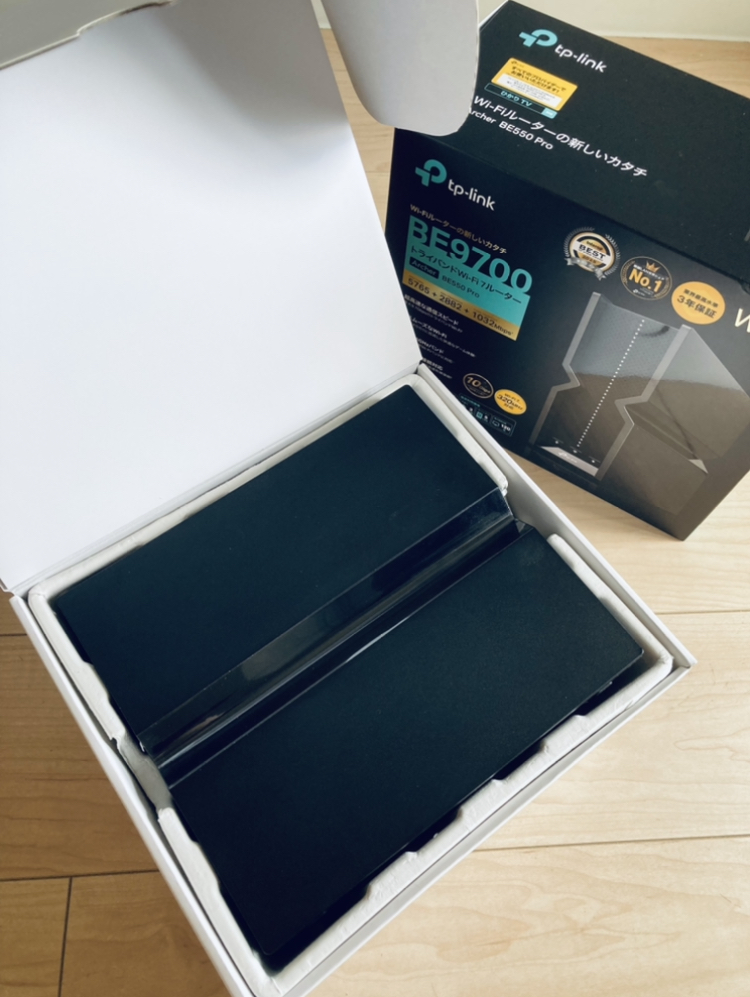
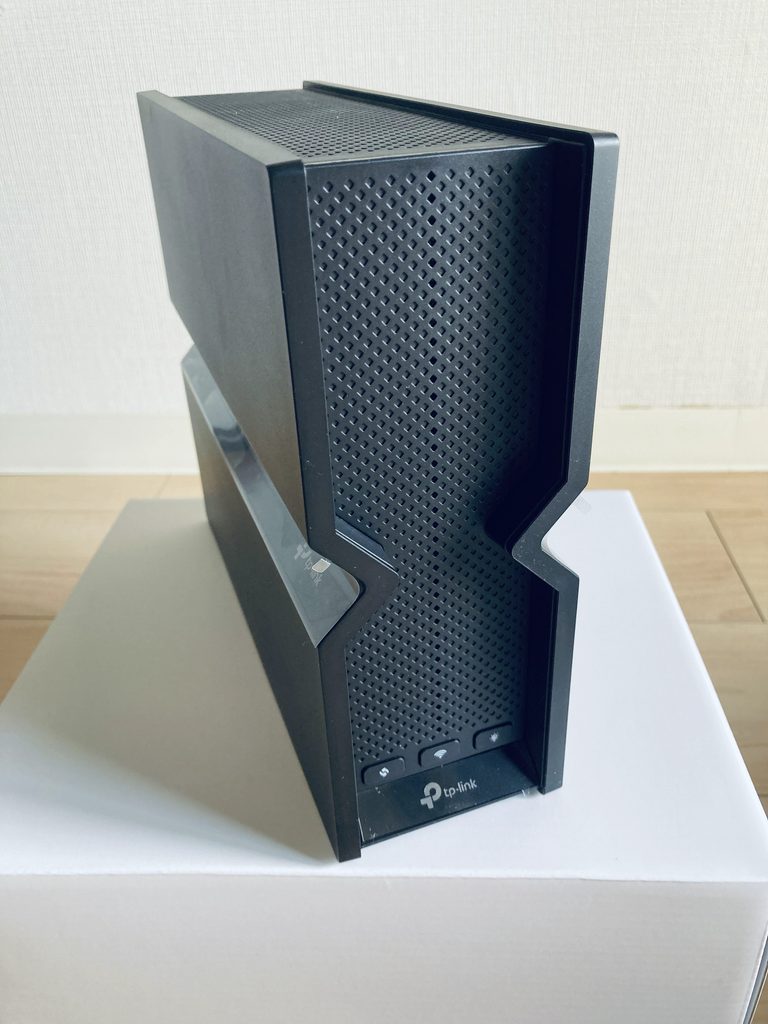
Visually, the router features hidden internal antennas with a recessed belt line running through the middle. The design language draws inspiration from the Dell XPS chassis from twenty years ago.Placed alongside other modern gaming consoles, it fits right in without looking like an alien spaceship.
The Highlights (Hardware Done Right)
- Antenna Array: The upper half of the body houses 6 integrated antennas covering the 2.4GHz, 5GHz, and 6GHz bands. Each band utilizes a dual-antenna setup, delivering a theoretical wireless throughput of up to 9,679 Mbps.
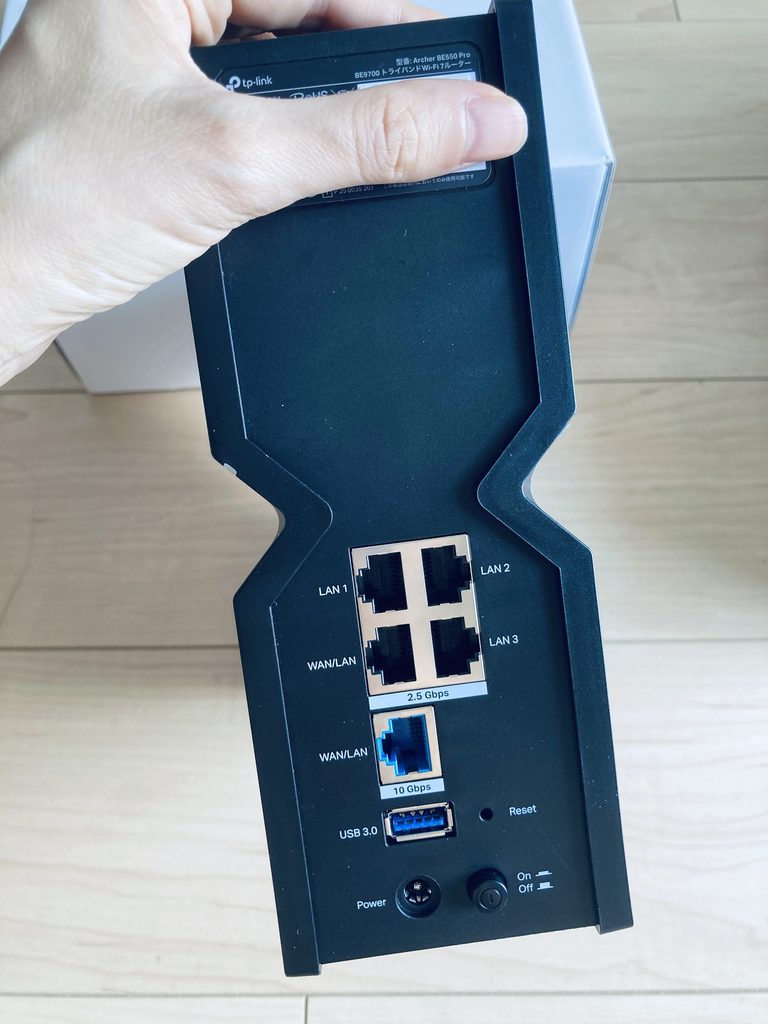
- Generous Ports: It comes with one 10G WAN port and four 2.5G LAN ports. Kudos to TP-Link here—many “10G” routers on the market foolishly pair a 10G WAN port with standard 1G LAN ports, bottlenecking the entire local network.
The Bottleneck: Disastrous Software
While TP-Link stacked the hardware specs to the ceiling, the software implementation is a complete letdown.
- Broken MLO: Although Multi-Link Operation (MLO) is supported on paper, enabling it results in severe packet loss and unbearable latency, making it practically unusable.
- Unstable Japanese IPoE (IPv4 over IPv6): For a router officially sold in Japan, its adaptation to local IPoE connections is abysmal. These connections rely heavily on IPv6, yet the stock firmware frequently drops the IPv6 connection. Worse, when it drops, the system fails to auto-restart or reconnect the IPv6 service—leaving you with no choice but to manually reboot the device.
To solve this, I flashed a separate device with OpenWrt to handle MAP-E link, converting the BE550 Pro into a glorified Access Point (AP).
My Advice to TP-Link: Spend less time on flashy, gimmick features and focus on rock-solid core software functionality.
If I could turn back time, I would not buy this router again.
Final Thoughts: Why 10G Fiber Matters in the AI Era
Japan is currently pushing symmetric 10G fiber to residential homes (10Gbps down / 10Gbps up). In the age of local AI workflows, this bandwidth isn’t just a luxury—it’s a necessity.
For example, pulling a local 32B parameter AI model requires downloading around 70GB of data. On a standard 1Gbps connection, that download takes an entire night. On a full 10G connection, it wraps up in a matter of minutes.
Related Reading :
- Advanced Play with Docker Compose in NAS
- Do you have to lose port 443 and your address will be with a little digital tail?No! Lucky+CloudFlare makes you clean and fresh!