When you first land in Japan, what is your #1 priority?
It’s registering your address at the local Ward Office (Kuyakusho) to update your Residence Card (Zairyu Card). Without a registered address, you cannot get a SIM card, open a bank account, or sign a long-term lease. You are essentially “digitally stranded.”
If you haven’t secured a permanent apartment yet and don’t have friends to host you, you need a temporary but “registrable” address. Here is how to navigate this transition using short-term rentals.
1. The “Airport Gap”
When you clear customs at major airports like Haneda, Narita, or Kansai, officers issue a Residence Card with a blank address field. This is a temporary status. You are legally required to register a permanent or semi-permanent residence at a Ward Office once you’ve settled.
2. Choosing Your “Home Base”: Hotels vs. Short-Term Rentals
Where should you stay for those first 30–60 days? Here is a breakdown of cost and convenience (from most expensive to most affordable):
Hotels > Serviced Apartments > Airbnbs > Short-term Rentals (Monthly Mansions) > Share Houses.
- Under 30 days: Hotels or Airbnbs are easiest, but ensure they allow address registration before booking. Some Ward Offices reject hotel addresses.
- Over 30 days: Short-term rentals (Weekly/Monthly Mansions) are the gold standard. They are cost-effective and specifically designed for mid-term stays. Look for listings tagged “Foreigner Friendly” (外国人可) to avoid the need for a local guarantor.
3. Top Resources for Finding Short-Term Rentals
Beyond Booking.com or Airbnb, these specialized Japanese platforms are your best bet. Note that most of these require no guarantor and are expat-friendly:
Aggregators (Search Portals):
- monthly-shintoshin.com: Focuses on Tokyo; no guarantor needed.
- weeklyandmonthly.com: Massive inventory, though info can sometimes be slightly outdated.
- tokyo-concierge.jp: Specialized in Tokyo metropolitan area.
- weekly-monthly.net : Reliable foreigner-friendly listings.
- liveMAX: A well-known hotel/apartment chain offering actual apartments (not just hotel rooms).
- sumyca.com : Excellent service and fast-moving inventory .
High-End / Serviced Apartments:
- duo-flats.jp: High quality, often accessible via the aggregators above.
- hmletjapan.com: Managed by Mitsubishi; premium quality and community-focused, primarily in Tokyo.
Pro-Tip: March to May is the peak season (Graduation and Sakura season). Competition is fierce, so book at least one month in advance.
4. The Booking & Contract Process
- Communication: Entirely via email. They sent a registration link where the contract was generated automatically.
- Signing: Done online. If your Japanese is rusty, translation tools work perfectly .
- Documents: You will need to provide IDs and passports for all occupants.
- Payment: Standard Visa/Mastercard credit cards are accepted.
- Receipts: Ensure you get a “Ryoushu-sho” (Receipt). If you are running a business in Japan, this is vital for tax deductions.
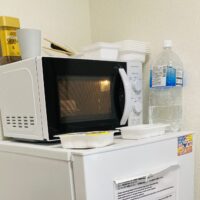
I personally used Sumyca to find a one-month rental. The process was surprisingly seamless。A corner of the room,There is a fridge and a microwave:

5. Check-in: A Social Distance Paradise
Most modern short-term rentals offer a “Contactless Check-in.” * 48 hours before arrival, you receive an email with a password and a URL.
- At the property, enter the code into the smart lock or a key box.
- Scan a QR code inside the room to complete the digital check-in.
6. Final Checklist Before You Book
- Mail & Address: Confirm with the management that you can register the address at the Ward Office and receive mail/packages.
- Cooking: If required, Check if there is a stovetop (IH or gas) and basic kitchenware.short-term rentals are usually equipped with a microwave.
- Facilities: Ensure there is a private bathroom (some cheap ones share facilities) and a washing machine (or a nearby laundromat).
Follow me for more “survival” tips on living and starting business in Japan.