In the long and often grueling journey of learning a foreign language, many learners find themselves in a frustrating “bottleneck”: you’ve memorized thousands of words, yet you can’t seem to string a coherent sentence together. Usually, the problem isn’t a lack of vocabulary—it’s the absence of a solid grammar framework.
Today, I want to share a resource that changed the game for me: Hitoshi Deguchi (出口仁), a master of Japanese grammar instruction.

1. Who is 出口仁 Hitoshi Deguchi?
Hitoshi Deguchi is a native Japanese speaker and a graduate of the prestigious University of Tsukuba. After university, he moved to Taiwan, which led to a unique professional quirk: in his beginner courses (N5/N4), he teaches in Chinese with a charming Taiwanese accent. This “gap” between his gentle, cute accent and his rigorous, high-level academic content creates a memorable teaching persona that is both accessible and professional.
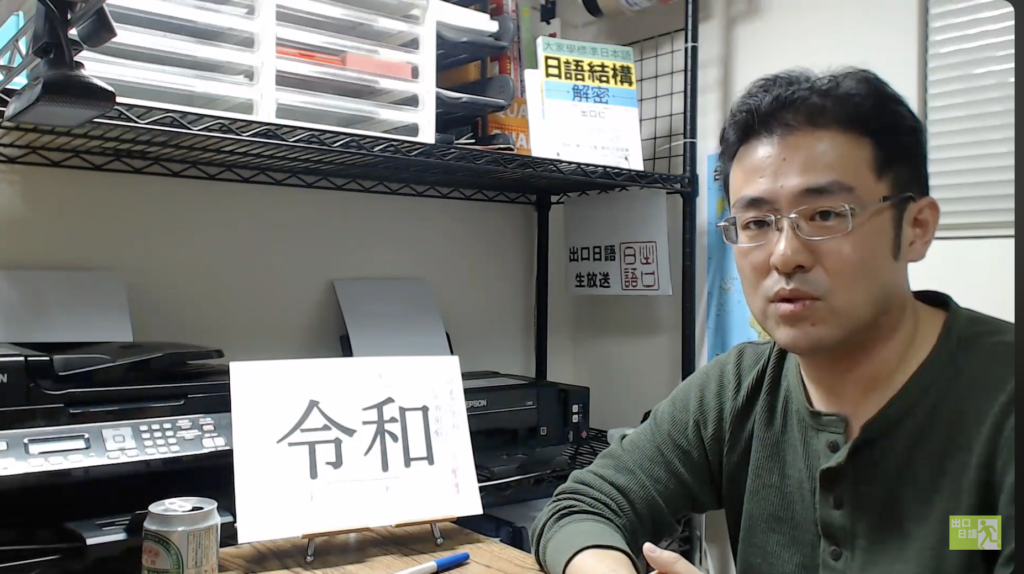
With over 20 years of experience in cross-cultural teaching, Deguchi-sensei profoundly understands the “pain points” of non-native learners. He doesn’t just teach you what to say; he deconstructs the why.
2. Grammar is the Blueprint; Vocabulary is the Brick
Many people dread studying grammar because it feels tedious and abstract. However, learning a language is like building a castle. Vocabulary represents the bricks, but grammar is the essential blueprint.
Without a blueprint, no matter how many expensive “bricks” (words) you collect, you will only end up with a disorganized heap of rubble. It will have no structural integrity and certainly no “living comfort.” Grammar is what connects those bricks into a logical system, allowing your “language castle” to rise from the ground. The core value of grammar is handing you that precise, reliable blueprint.
3. A Systematic and Three-Dimensional Approach
What sets Deguchi-sensei apart is the sheer systematic integrity of his curriculum. He maps out Japanese from isolated points into a complete three-dimensional network:
- The Native Mindset: As a native speaker, he explains why Japanese people think the way they do. This mindset-first approach helps learners avoid the trap of “translated Japanese” (e.g., applying English or Chinese logic to Japanese).
- Cultural Nuance & Trivia: He peppers his lessons with fascinating insights. For example, he warns: “If a doctor looks at you and says, ‘It appears (rashii/らしい) you have a broken bone,’ get a second opinion immediately!” In Japanese, rashii implies a level of uncertainty that a professional shouldn’t have—knowing these nuances is the difference between a student and a speaker.
- A Logical Progression: His courses follow a perfect cognitive ladder. N5-N4 levels are explained in Mandarin to ensure fundamental concepts are crystal clear. From N3 to N1, he transitions into an all-Japanese environment, guiding you into full immersion.
- Flexible Access: He offers high-quality free lessons on YouTube, alongside premium, in-depth courses for different proficiency levels. There is an option for every budget and goal.
4. Addressing the “Boredom” Factor
Some critics argue that Deguchi-sensei’s style is “dry.” There are no flashy interactions—only a blackboard, a chalk, and pure logical deduction. Admittedly, as a beginner, I also felt overwhelmed at times, especially when staring at his exhaustive tables of verb conjugations and classifications.
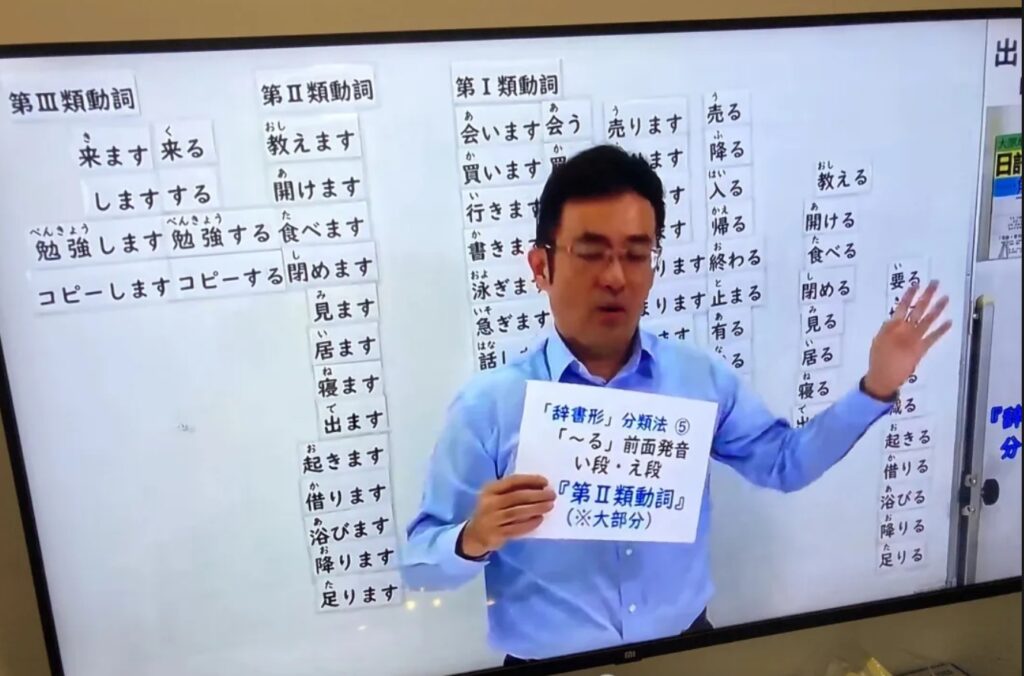
However, as I progressed and eventually looked back, I had an epiphany: those “boring” tables are actually incredibly consistent. Once you understand the logic, Japanese verb conjugation works like a chemical formula—you just plug the words in.
A solid foundation requires a bit of “boring” heavy lifting. Those rules are the scaffolding for your future skyscraper. You must first connect the logical dots in your brain before you can expand upward. Hitoshi Deguchi is like an old-school master architect: his blueprints aren’t flashy, but they are incredibly stable.
Follow me for more “survival” tips on living and doing business in Japan.