I previously shared a curated list of short-term rental platforms in Japan—a great high-value alternative to Tokyo’s pricey hotels, whether you’re traveling or in a transition phase:
Why Short-Term Rentals are the Perfect Bridge for Moving to Japan?
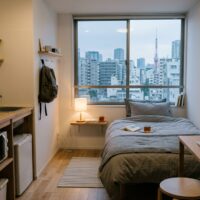
With the new school and moving season approaching, I’ve received many messages asking for specifics. I dug through my archives and found the footage of the unit I stayed in. While it certainly doesn’t offer the luxury of a hotel, it perfectly embodies the Japanese concept of “small but mighty” (everything you need in a tiny space).
Here are the unfiltered details of my experience:
1. The Logistics: Location & Price
- Location: Toshima-ku, near Ikebukuro. It’s incredibly central with easy access to anywhere in Tokyo. Crucially, the management allowed me to use the address for Residence Card (Zairyu Card) registration.
- Price: Around ¥210,000 (approx. 10,000 RMB / $1,400 USD) per month. I found that booking directly through short-term rental sites was slightly cheaper than Airbnb.
- What’s Included: This covered two occupants (unlike Japanese hotels which usually charge per person), all utilities (electricity, water, gas), high-speed Wi-Fi, and the move-out cleaning fee.
- The “30-Day Rule”: Interestingly, my agent pointed out that renting for 30 days was actually cheaper than 25 days due to monthly discount structures. Always check the math!
2. Room & Facilities
The unit was roughly 12 square meters.
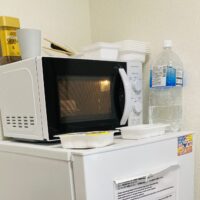
- Appliances: It had everything except a washing machine—TV, AC, microwave, kettle, fridge, vacuum, and even a hairdryer.
- Kitchen: There was an induction stove and basic cookware. However, I survived entirely on microwaveable meals from the local konbini (convenience store).
- Deposits: For stays under 15 days, a small deposit is usually required. For my full month stay, no deposit was needed, which was a huge plus for cash flow.
3. The “Social Battery” Saver
One of the best features was the contactless check-in and check-out. Everything was handled via QR codes and email. Aside from receiving packages, I never had to interact with anyone in person—a true paradise for introverts.
The Reality Check (The Cons)
It wasn’t all sunshine and cherry blossoms. Here is what you need to be prepared for:
- Thin Walls: This is common in “Airbnb-style” apartments. I could hear my neighbors (who were mostly tourists) talking loudly. Luckily, they were speaking German and Korean, so I didn’t understand a word—but I’d highly recommend bringing earplugs.
- Basic Comforts: The mattress was a bit soft, the pillows lacked support, and the provided toiletries were the most basic “budget” versions. It’s functional, but don’t expect a 5-star sleep.
- No Housekeeping: Unlike a hotel, you are responsible for your own cleaning and trash. There was also no balcony, making it tricky to air out damp towels.
Final Verdict
If you are looking for a cost-effective “home base” to start your life in Japan or for a long-term exploration, these short-term rentals are unbeatable for the price.
All USD conversions are based on March 2026 exchange rates.
Follow me for more insights on living and starting a business in Japan.